
Why shared sequence watch matters now
Genomic data is no longer locked in individual research labs. It is pooled, shared, and analyzed across global networks to accelerate personalized medicine. This shift creates a critical need for monitoring shared sequences. Without proper oversight, the integrity of these shared datasets can be compromised, affecting everything from drug discovery to patient care.
The goal of shared sequencing is to bring stronger network security and better decentralization through the shared usage of sequencers. As more institutions contribute data, the complexity of tracking who accesses what, and when, grows exponentially. A robust monitoring tool acts as the central nervous system for these distributed genomic resources.
The rise of AI in genomics means that data privacy is not just a compliance issue—it is a technical necessity. AI models trained on shared sequences can inadvertently leak sensitive information if the source data is not properly monitored and anonymized.
For researchers and biotech firms, the ability to track sequence usage ensures that bioethical standards are maintained. It prevents unauthorized replication of sensitive genetic markers and ensures that data contributions are credited correctly. In 2026, monitoring is not an optional add-on; it is the foundation of trust in genomic data sharing.
Top platforms for genomic data sharing
Finding the right tool for genomic data sharing requires balancing accessibility with strict security protocols. Researchers need platforms that handle large file transfers without compromising data integrity or patient privacy. Below are three distinct approaches to managing shared sequence data, ranging from specialized viewers to comprehensive data commons.
NCBI Multiple Sequence Alignment Viewer
The NCBI Multiple Sequence Alignment Viewer (MSA) serves as a specialized graphical interface for nucleotide and protein sequence alignments. Rather than acting as a broad data repository, it functions as a collaborative analysis tool. Researchers can upload aligned sequences to visualize variations, conservation patterns, and structural motifs in real time. This makes it particularly useful for teams working on phylogenetic studies or protein structure analysis who need to share visual interpretations rather than raw datasets. It integrates directly with the NCBI database, allowing users to pull existing sequences for immediate comparison. For more details on its capabilities, see the NCBI MSA documentation.
The NCI Genomic Data Commons (GDC)
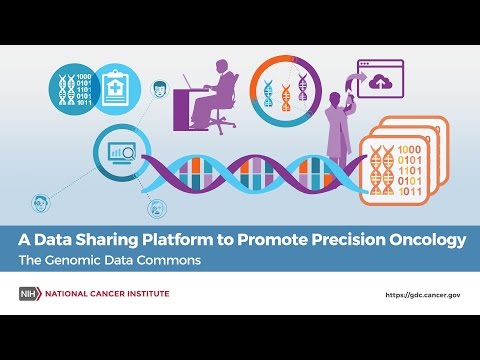
For large-scale collaborative research, the Genomic Data Commons (GDC) provides a centralized infrastructure for storing and sharing cancer genomics data. Managed by the National Cancer Institute, the GDC offers a secure environment for processing, sharing, and analyzing high-throughput genomic data. It is designed to support multi-institutional studies by providing standardized pipelines for data processing. This reduces the variability often seen when different labs process the same type of genomic data. The platform supports a wide range of file formats and provides robust APIs for programmatic access. This image illustrates the interface of the NCI Genomic Data Commons, highlighting its focus on computational genomics.
Comparison of key features
When selecting a platform, consider the scale of your data and the level of collaboration required. The table below summarizes the core strengths of each approach.
| Platform | Primary Focus | Data Type |
|---|---|---|
| NCBI MSA | Sequence Alignment Visualization | Nucleotide/Protein Alignments |
| NCI GDC | Cancer Genomics Storage & Analysis | High-Throughput Genomic Data |
| Generic Cloud Storage | Flexible File Transfer | Any Genomic File Format |
Related tools and resources
For researchers looking to expand their toolkit, there are several hardware and software resources that support genomic data management. The following items are commonly used in genomics labs for data processing and reference.


As an Amazon Associate, we may earn from qualifying purchases.
How AI drives personalized medicine trends
Artificial intelligence has transformed how we interpret shared sequence data, turning raw biological information into actionable clinical insights. In personalized medicine, the ability to rapidly align and compare genetic sequences is no longer a manual bottleneck but an automated pipeline. AI models process these shared sequences to identify subtle variations that traditional methods might miss, allowing for treatments tailored to an individual's specific genetic makeup.
This computational power relies heavily on robust monitoring tools to ensure data integrity. Just as a shared sequence in Informatica Cloud (IICS) allows multiple transformations to reuse a single logic block for efficiency, AI systems depend on standardized sequence monitoring to track data lineage and quality. When monitoring tools fail to flag discrepancies in shared sequence data, the downstream AI predictions can become unreliable, leading to potential risks in patient care.
The convergence of AI and sequence monitoring creates a feedback loop. As AI algorithms analyze larger datasets of shared sequences, they refine their own accuracy, which in turn demands more sophisticated monitoring to handle the increased volume and complexity. This synergy is why selecting the right monitoring solution is critical; it serves as the foundational infrastructure that allows AI to scale from experimental research to routine clinical application.
Navigating bioethics in data sharing
Sharing genomic data drives scientific progress, but it carries significant ethical weight. When you share sequence information, you are not just transferring code; you are revealing sensitive details about health, ancestry, and identity. Responsible usage requires a structured approach to privacy and consent.
Use this checklist to ensure your data sharing practices remain ethical and compliant.
Ensure the data subject has provided informed, explicit consent for the specific type of sharing. Consent must be revocable and clearly explain potential risks.
Remove direct identifiers like names and addresses. More importantly, mask unique genetic markers that could re-identify an individual even from anonymized datasets.
Specify exactly how the data can be used. Prevent secondary uses that were not part of the original agreement, such as commercial exploitation or law enforcement access.
Use encryption and access controls to protect data at rest and in transit. Regular audits should verify that only authorized personnel can view the sequence information.
Establish a clear timeline for when the data will be destroyed. Ensure that all copies, including backups, are securely erased when the consent period ends.
Frequently asked questions about shared sequences
What is a shared sequence in IICS?
A shared sequence is a reusable configuration that multiple Sequence Generator transformations can reference. Instead of defining the same start value, increment, and cache size in every mapping, you create one shared sequence and link it to your transformations. This ensures consistent numbering across different parts of your data integration project without duplicating logic.
Can multiple mappings use the same shared sequence?
Yes. Multiple mappings and mapplets can use the same shared sequence. When a mapping runs, it pulls the next value from the shared sequence’s state. This is useful for generating unique identifiers across related datasets, such as linking orders to customers in separate tables.
How do shared sequences differ from local sequences?
Local sequences are defined inside a single transformation and only apply to that specific mapping. Shared sequences exist at the repository level and can be called by any transformation that has permission to access them. This centralization reduces maintenance overhead and prevents configuration drift across your ETL workflows.
No comments yet. Be the first to share your thoughts!