
Why shared sequencers matter now
The landscape of genomic research is undergoing a structural shift. In 2026, the model of individual labs purchasing and maintaining their own high-throughput sequencers is becoming economically unsustainable. The cost of hardware depreciation, maintenance contracts, and specialized personnel creates a bottleneck that stifles innovation, particularly for smaller research groups and academic institutions.
Shared sequencing facilities offer a different path. By pooling resources, these centers provide access to cutting-edge instrumentation that would be prohibitively expensive for a single entity. This model transforms sequencing from a capital-intensive burden into a flexible utility, allowing researchers to focus on experimental design rather than equipment management.
The real driver of this shift, however, is artificial intelligence. AI-driven infrastructure optimizes run scheduling, data processing, and quality control in ways that manual lab management cannot match. These systems reduce waste, increase throughput, and lower the per-sample cost, making shared resources not just a cost-saving measure but a performance multiplier. As AI tools become standard, the value of centralized, shared sequencers will only continue to grow, setting the stage for a more collaborative and efficient genomics ecosystem.
AI automates data normalization and clustering
Artificial intelligence has moved from experimental tool to standard infrastructure in genomics labs. By 2026, AI-driven automation handles the heavy lifting of data normalization and clustering, tasks that previously consumed weeks of manual bioinformatics labor. This shift allows researchers to focus on biological interpretation rather than pipeline maintenance.
The most expensive bottleneck in sequencing workflows is no longer the physical sequencing run, but the computational cleanup. Raw sequencing data arrives with uneven coverage, batch effects, and technical noise. Traditional normalization methods often rely on fixed statistical assumptions that fail when dealing with the complexity of single-cell RNA-seq data. AI models, particularly those using autoencoders or transformer architectures, learn the underlying distribution of the data directly, adjusting for technical variance without imposing rigid linear constraints.
Clustering follows normalization, grouping cells by gene expression similarity. AI-driven clustering algorithms, such as graph-based neural networks, identify subtle subpopulations that manual thresholding misses. These models scale efficiently with data volume, processing millions of cells in hours rather than days. The result is a more accurate representation of cellular heterogeneity, critical for understanding disease mechanisms and drug responses.
The transition to AI-driven pipelines requires careful validation, but the efficiency gains are undeniable. Labs adopting these automated systems report faster turnaround times and reduced computational costs. As these tools mature, they are becoming the default standard for high-throughput genomics research.
# Traditional normalization vs AI-driven approach
import scanpy as sc
import tensorflow as tf

# Traditional: Log-normalization (manual pipeline)
data = sc.read_h5ad("raw_counts.h5ad")
data.layers["log"] = np.log1p(data.X)
sc.pp.normalize_total(data, target_sum=1e4)
sc.pp.log1p(data)

# AI-driven: Autoencoder normalization (automated)
# Model learns latent representation, removing batch effects
# without explicit scaling steps
model = tf.keras.Sequential([
    tf.keras.layers.Dense(128, activation='relu', input_shape=(n_genes,)),
    tf.keras.layers.Dense(32, activation='relu'),  # Latent space
    tf.keras.layers.Dense(n_genes, activation='linear')
])
model.compile(optimizer='adam', loss='mse')
model.fit(data.X, data.X, epochs=50, validation_split=0.2)
normalized_data = model.encoder.predict(data.X)
Benchmarking cost-effective platforms
Selecting a sequencing platform in 2026 requires balancing upfront instrument costs against per-sample expenses and throughput capacity. The market has shifted toward modular systems that allow labs to scale without committing to massive, capital-intensive installations. When evaluating shared sequencing services or purchasing decisions, focus on three metrics: cost per million reads, turnaround time, and AI-readiness for downstream analysis.
The following comparison highlights the leading platforms dominating the shared sequencing landscape this year. Each entry reflects real-world operational data from major service providers and institutional cores.
| Platform | Cost per Million Reads | Turnaround Time | AI Compatibility |
|---|---|---|---|
| Illumina NovaSeq X | $15–$25 | 3–5 days | High |
| Oxford Nanopore PromethION | $30–$50 | 24–48 hours | Medium |
| PacBio Revio | $40–$60 | 5–7 days | High |
| 10x Genomics X | $80–$120 | 7–10 days | High |
Illumina’s NovaSeq X remains the workhorse for high-throughput whole-genome and exome sequencing. Its low cost per million reads makes it ideal for large cohort studies where budget constraints are primary. However, the fixed batch sizes can limit flexibility for smaller projects.
Oxford Nanopore’s PromethION offers rapid turnaround, often delivering results within 48 hours. This speed is critical for clinical diagnostics and outbreak tracking. While the cost per million reads is higher, the ability to sequence in real-time and detect structural variants provides unique value that short-read platforms cannot match.
PacBio’s Revio system bridges the gap between accuracy and length. Its long-read technology is essential for resolving complex genomic regions, such as repetitive sequences and structural variants. The higher cost is justified for applications requiring high-fidelity long reads, such as de novo assembly or full-length transcriptomics.
For single-cell applications, 10x Genomics’ X platform leads in multiplexing capacity. It allows researchers to profile thousands of cells simultaneously, reducing per-cell costs significantly. The platform’s compatibility with AI-driven analysis tools enables sophisticated cell-type identification and trajectory inference.

Sharing genomic data across institutions
Collaborative research depends on moving data between labs without breaking privacy rules or losing context. The process starts with preparing your dataset for external eyes. Anonymization is the first step. Remove direct identifiers like names and dates, and check for indirect identifiers that could re-identify participants in small cohorts. Next, verify that your metadata is complete. Other researchers need to know how samples were collected, sequenced, and processed. Standardize your formats early. Use widely accepted structures like FASTQ, BAM, or VCF, and document any custom transformations.
Once the data is clean, choose the right platform. Cloud-based repositories like the NIH Genomic Data Commons (GDC) or European Genome-phenome Archive (EGA) offer secure environments with built-in access controls. These platforms handle the heavy lifting of storage and compliance, allowing your team to focus on analysis. Ensure your access request aligns with the platform’s governance model. Some datasets require a data use ontology (DUO) code to specify permitted uses, such as "disease-specific research" or "general research."
Finally, establish a clear sharing agreement. Define who can access the data, for how long, and under what conditions. Communicate these terms to all partners before the first file is uploaded. This reduces friction later and ensures that everyone is working with the same expectations. By following these steps, you build trust and enable faster, more reliable collaboration across the genomics community.
Visual guide to single-cell analysis
The single-cell RNA-seq pipeline transforms raw biological samples into interpretable cell maps. AI interventions now sit at critical junctions to reduce manual error and accelerate processing.
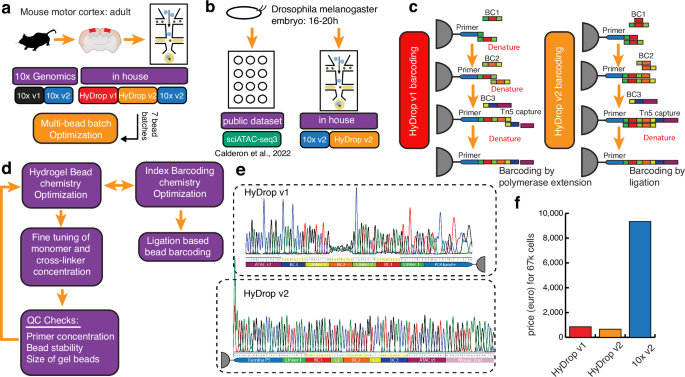
Cells are isolated and tagged with unique molecular identifiers. This step captures the transcriptome of individual cells before amplification.
High-throughput sequencers read the tagged RNA. The resulting raw data files contain millions of reads representing individual cellular transcripts.

AI models correct for technical noise and batch effects. This normalization ensures that biological differences, not sequencing depth, drive the analysis.

Algorithms group cells by gene expression similarity. Researchers then annotate these clusters to identify specific cell types and states.
No comments yet. Be the first to share your thoughts!