
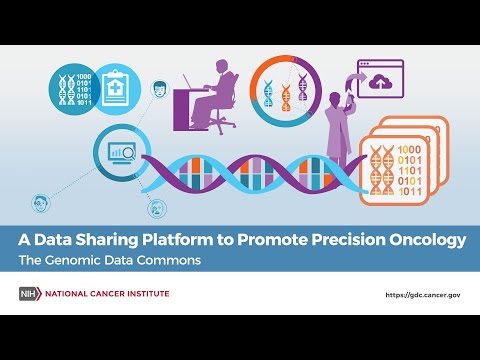
NIH updates genomic data sharing policy
The National Institutes of Health (NIH) has announced significant revisions to its Genomic Data Sharing (GDS) policy, aimed at standardizing compliance across all Institutes and Centers (ICs). This update addresses long-standing inconsistencies in how researchers manage and report genomic data, with the goal of reducing administrative burden while ensuring rigorous data stewardship.
Central to this policy shift is the introduction of a new, standardized Data Management and Sharing Plan (DMSP) form. Previously, applicants often navigated varying requirements depending on the specific IC or grant mechanism. The new unified form is designed to streamline the application process, providing clearer guidance on data sharing expectations and reducing the time researchers spend on compliance documentation.
The NIH is currently seeking public feedback on these proposed revisions through a Request for Information (RFI). Researchers, data stewards, and support professionals are encouraged to review the full proposal and submit comments by March 18, 2026. This feedback period allows the agency to refine the policy before final implementation.
The revised policy becomes effective on May 25, 2026. On this date, all NIH applicants and awardees will be required to use the new standardized DMSP form for genomic data sharing plans. Compliance with this updated framework is mandatory for all relevant grant applications submitted on or after this effective date.
The new standardized Data Management and Sharing Plan (DMSP) form is mandatory for applications submitted on or after May 25, 2026.
This regulatory change represents a significant step toward harmonizing data sharing practices within the US Federal Government research ecosystem. By consolidating requirements into a single, clear form, the NIH aims to improve consistency and transparency in genomic data management, facilitating broader access to valuable research data while supporting researcher efficiency.
Standardized form reduces researcher burden
The National Institutes of Health (NIH) is replacing the previous patchwork of institutional data sharing plans with a single, standardized Data Management and Sharing Plan (DMSP) form. This change, effective May 25, 2026, aims to reduce administrative overhead for researchers while ensuring consistency across all NIH Institutes and Centers (ICs).
Previously, applicants often navigated varying requirements depending on their home institution or specific program announcements. The new unified form simplifies this process by providing a single, shorter template that all ICs will accept. This standardization is designed to minimize confusion and streamline the submission process for grant applications.
Compliance with this new format is mandatory for all applicable grants. The form requires applicants to detail their approach to large-scale genomic data sharing and controls for human participant data. By adopting a uniform structure, the NIH seeks to improve the quality and accessibility of shared data while lowering the burden on the research community.
Researchers should prepare their submissions using the new format well before the March 18, 2026, policy announcement deadline to ensure a smooth transition. The goal is to create a more efficient pathway for genomic data sharing that benefits both scientists and the public.
Controlled access for human participant data
Use this section to make the Shared Genomic Data decision easier to compare in real life, not just on paper. Start with the reader's actual constraint, then separate must-have requirements from details that are merely nice to have. A practical choice should survive normal use, maintenance, timing, and budget. If a recommendation only works in an ideal situation, call that out plainly and give the reader a fallback path.
The simplest way to use this section is to write down the must-have criteria first, then compare each option against those criteria before weighing nice-to-have features.
Public comment period ends March 18
The National Institutes of Health (NIH) is currently accepting public feedback on proposed revisions to its Genomic Data Sharing (GDS) policy. This regulatory phase allows researchers, data stewards, and institutional representatives to influence the final framework before it becomes mandatory.
The comment period closes on March 18, 2026. Stakeholders are encouraged to review the full Request for Information (RFI) and submit their responses through the designated federal portal. Input during this window is critical for shaping the practical implementation of controlled-access systems for human participant data.
Following the comment period, the NIH will finalize the policy updates. The new Data Management and Sharing Plan (DMSP) form requirements are scheduled to become mandatory for new grant applications on May 25, 2026. Institutions should monitor official NIH channels for final guidance on compliance timelines and technical specifications.
Frequently asked questions about GDS
The following section addresses common inquiries regarding the NIH Genomic Data Sharing (GDS) Policy, the classification of genomic data, and the resources available for compliance. This information is derived from official NIH directives and GA4GH frameworks.
What is the NIH policy on genomic data sharing?
The NIH GDS Policy requires that all NIH-funded research involving human or non-human genomic data include a Data Management and Sharing Plan. Researchers must share these data broadly and responsibly within 12 months of publication, unless specific exceptions apply. The policy applies to data generated by NIH grants, cooperative agreements, and contracts. Compliance is mandatory for all NIH-funded institutions and investigators to ensure transparency and accelerate scientific discovery.
Is genomic data considered big data?
Yes, genomic data is classified as big data due to its volume, velocity, and variety. A single human genome contains approximately 3 billion base pairs, generating terabytes of raw data per individual. This scale exceeds traditional data management capabilities, requiring specialized infrastructure for storage, analysis, and secure sharing. The complexity arises from the need to handle both sequence data and associated phenotypic information simultaneously.
What are some publicly available genomic databases?
Researchers rely on several primary repositories for data deposition and access. The National Center for Biotechnology Information (NCBI) hosts the dbGaP (Database of Genotypes and Phenotypes) and SRA (Sequence Read Archive). The European Nucleotide Archive (ENA) and the DNA Data Bank of Japan (DDBJ) serve as international partners in the International Nucleotide Sequence Database Collaboration. These platforms provide standardized access to genomic sequences and associated metadata.
What is the role of GA4GH in genomic data sharing?
The Global Alliance for Genomics and Health (GA4GH) develops technical standards and frameworks to facilitate responsible data sharing. Their Framework provides guidance on privacy, security, and ethical considerations for sharing human genomic and health-related data. GA4GH tools help researchers manage data access controls and interoperability across different jurisdictions and systems.
No comments yet. Be the first to share your thoughts!