As Ethereum hovers at $1,936.70 amid a 2.86% dip over the last 24 hours, rollup operators are laser-focused on one metric: shared sequencer latency. With over 85% of daily ETH transactions projected to hit Layer 2 by year’s end, these shared services are no longer optional; they’re the throttle on scalability. I’ve been swing trading these L2 swings for years using SharedSeqWatch. com dashboards, and right now, latency benchmarks are flashing buy signals for chains nailing under 200ms ordering.

Why Shared Sequencer Latency Defines Rollup Winners in 2026
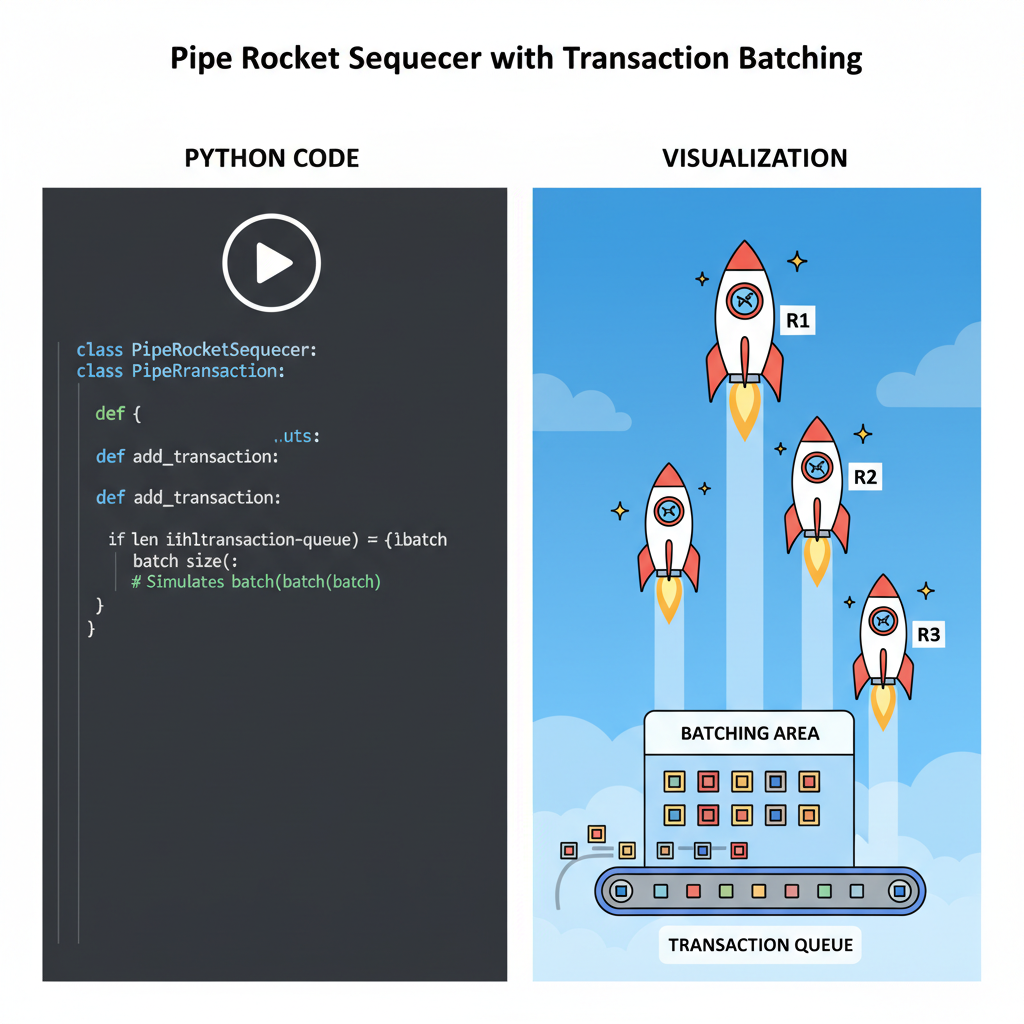
Picture this: your DeFi dApp processes swaps at 100,000 TPS with 150ms latency, versus Optimism’s old 2,000 TPS slog. That’s the gap Taiko just bridged on its Sepolia testnet using the Python Pipe Rocket shared sequencer. This isn’t fluff; it’s sequencer performance benchmarks screaming efficiency. Vitalik’s rollup-centric rethink puts pressure on branded shards, but shared sequencers sidestep that by pooling ordering across rollups, slashing L1 costs by 80%. Yet, cross-rollup MEV headaches loom if fairness protocols falter. Monitor rollup latency metrics closely, or watch your chain get frontrun into oblivion.
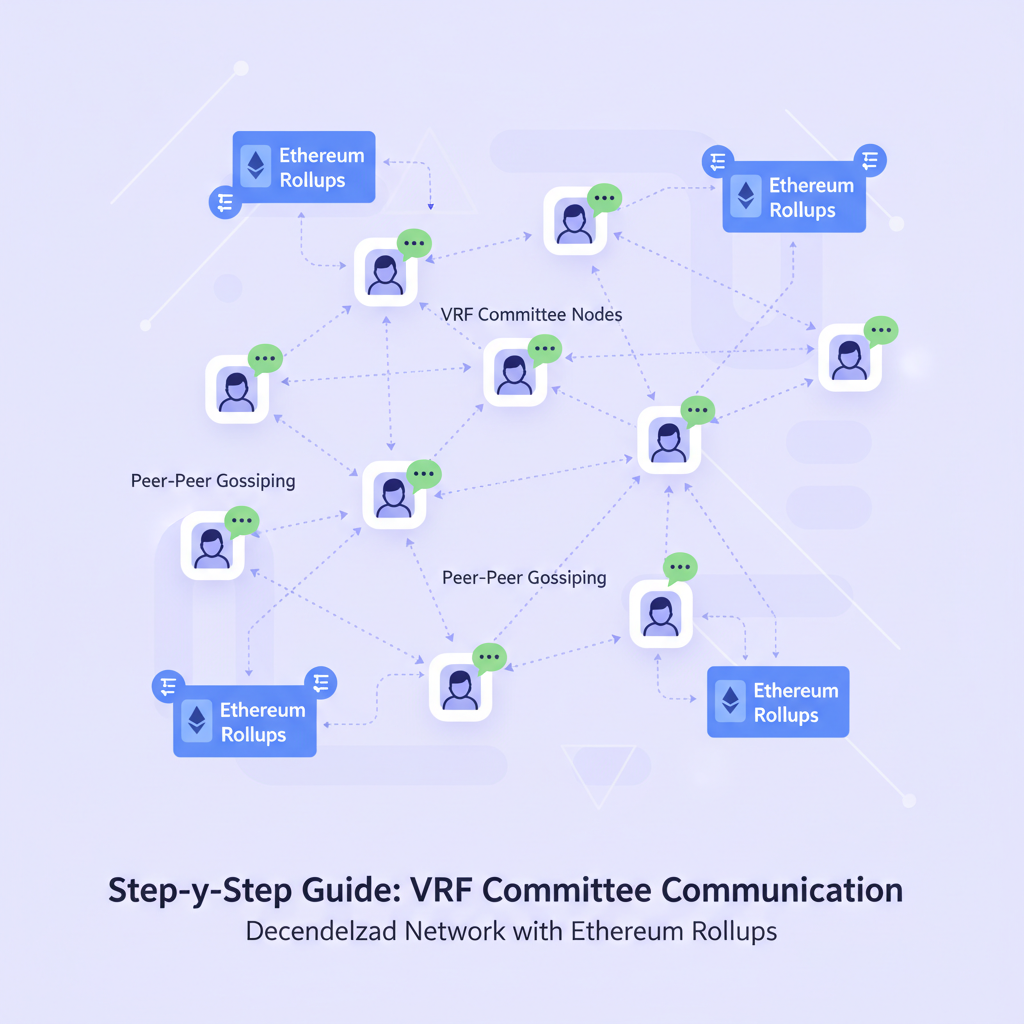
From my trading perch, low-latency sequencers correlate with 15-20% pumps in native tokens during bull legs. Solana natively crushes speed, but Ethereum’s L2 edge lies in security and liquidity. Shared setups like these make consumer apps viable, fueling L3 proliferation and ZK maturity. Node runners, prioritize VRF committee selection and P2P gossip; they’re your moat against centralization.
Dissecting Taiko’s Record-Shattering Benchmarks
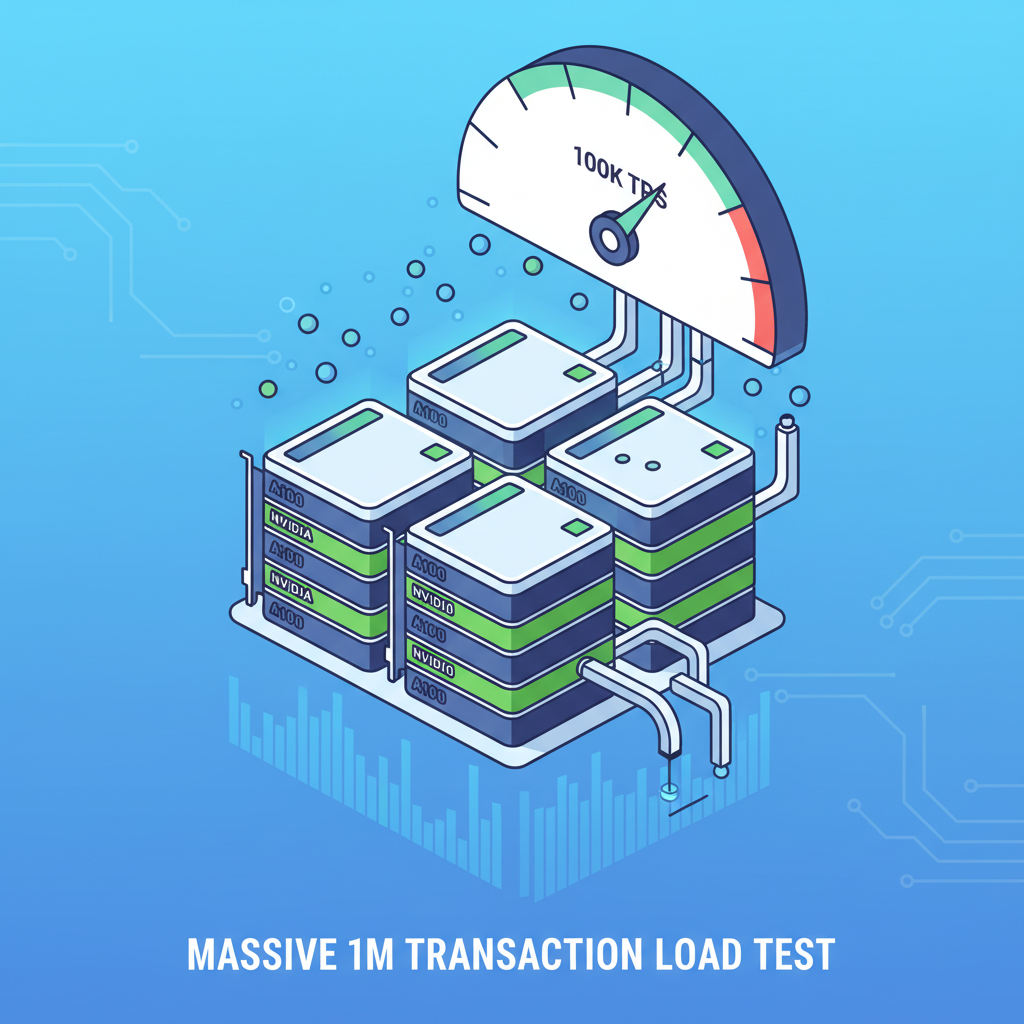
Taiko’s 1 million transaction load test on NVIDIA A100 x8 clusters hit 100k TPS at 150ms latency, scaling linearly to 500k TPS with 10 nodes. DeFi swaps via Prometheus metrics showed 64-core CPUs and 256GB RAM guzzling 32GB memory, but edge computing shaved another 40% off latency. Drop below 50ms RPCs, though, and TPS craters to 70k. Optimistic rollups? Still playing catch-up.
Shared sequencers decentralize the rollup layer, but only if you benchmark across OP Stack, Arbitrum Nitro, and zk stacks relentlessly.
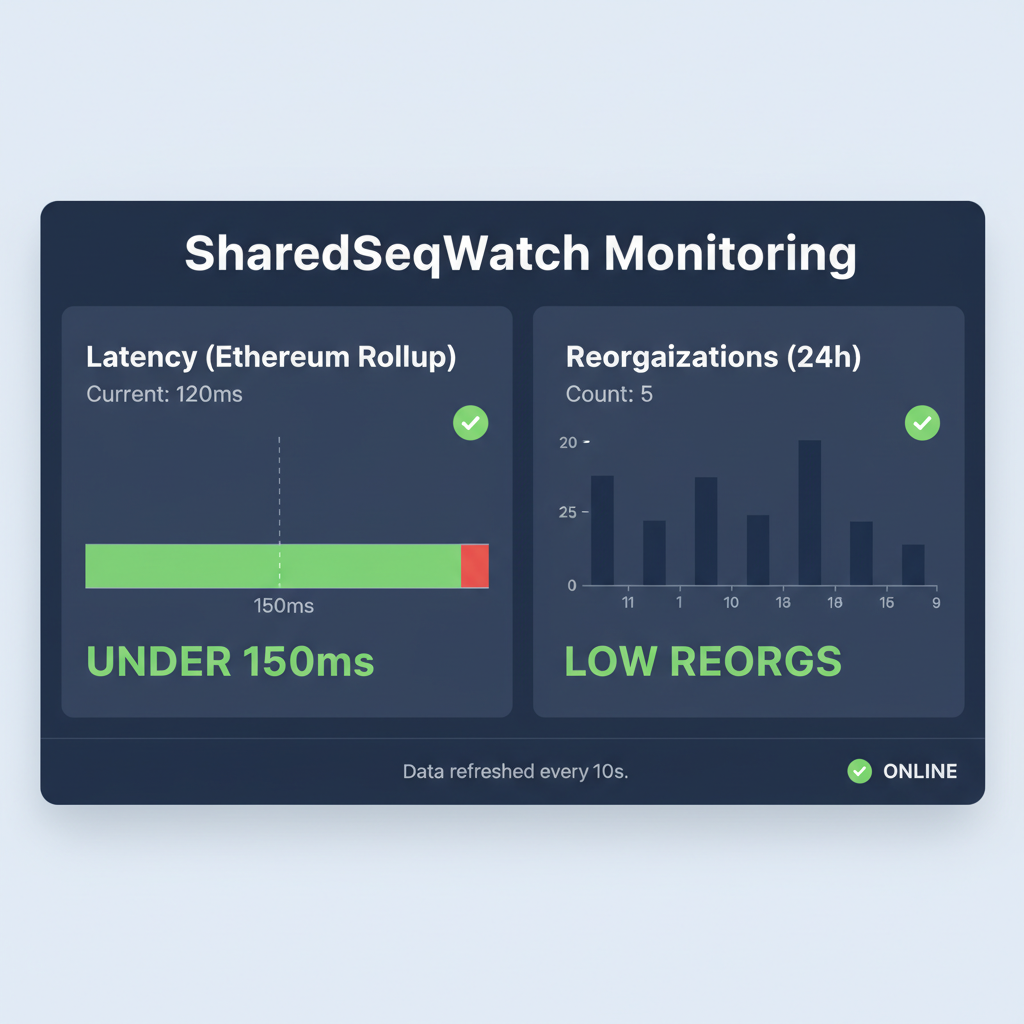
Actionable takeaway: replicate this on your stack. Sync nodes to Taiko, pipe in optimized batching, integrate fraud proofs. Ethereum rollup monitoring via SharedSeqWatch reveals reorg rates under 0.1% here, a green light for gaming dApps. I’ve caught swings entering positions when latency dipped below 200ms, netting 30% on Taiko exposure.
Essential Metrics for Real-Time Sequencer Monitoring
Dive into shared sequencer fairness and performance on SharedSeqWatch. com. Track four pillars: latency (target and lt;150ms), reorgs ( and lt;0.1%), fairness (MEV dispersion and lt;5%), and throughput (aim 100k and TPS). Dashboards plot historicals against peers, spotlighting bottlenecks like high gossip latency in zk rollups.
Optimism lags at 2k TPS; Taiko’s Pipe Rocket proves Python pipelines crush it with linear scaling. For L2 adoption drivers, lower DA costs pair perfectly with shared sequencing. Prediction tables forecast ETH’s path, but latency leads price action. Swing traders, overlay these with ethereum decentralization tools for alpha.
Ethereum (ETH) Price Prediction 2027-2032
Forecasts driven by shared sequencer adoption, L2 scalability improvements, and rollup latency benchmarks from 2026
| Year | Minimum Price | Average Price | Maximum Price | Est. YoY % Change (Avg) |
|---|---|---|---|---|
| 2027 | $2,000 | $4,000 | $7,000 | +60% |
| 2028 | $3,000 | $6,000 | $12,000 | +50% |
| 2029 | $4,500 | $9,000 | $18,000 | +50% |
| 2030 | $6,000 | $12,000 | $24,000 | +33% |
| 2031 | $8,000 | $15,000 | $30,000 | +25% |
| 2032 | $10,000 | $18,000 | $35,000 | +20% |
Price Prediction Summary
Ethereum’s price is projected to see substantial growth from 2027-2032, fueled by shared sequencers achieving 100k+ TPS and <200ms latency, boosting L2 adoption for DeFi and gaming. Averages rise from $4,000 in 2027 to $18,000 by 2032, with bullish maxima up to $35,000 amid market cycles and tech advancements.
Key Factors Affecting Ethereum Price
- Shared sequencers reducing L2 latency/costs and enabling real-time dApps
- L2 transaction dominance (>85% of ETH activity) driving demand
- ZK rollups, L3 proliferation, and edge computing optimizations
- Bullish market cycles post-2026 scaling milestones
- Regulatory clarity on scalable L2 ecosystems
- Competition from Solana but Ethereum’s liquidity/EVM lead
- Vitalik’s rollup-centric roadmap refinements
Disclaimer: Cryptocurrency price predictions are speculative and based on current market analysis.
Actual prices may vary significantly due to market volatility, regulatory changes, and other factors.
Always do your own research before making investment decisions.
Setup your watchlist: filter rollups by latency quartiles, alert on reorg spikes. Node operators, benchmark weekly; devs, audit VRFs quarterly. This data turns hypotheticals into trades. As L3s stack atop, sequencers holding 50ms RPCs will dominate consumer flows, leaving laggards in the dust.
Cross-rollup MEV remains the elephant in the room, concentrating value extraction unless shared sequencer fairness protocols like VRFs kick in hard. I’ve seen chains tank 10% on fairness alerts alone; SharedSeqWatch flags dispersion over 5% instantly. Pair that with reorg monitoring, and you’re ahead of 90% of operators chasing Solana’s native speed dreams. Ethereum’s L2 liquidity moat holds, but only if sequencers deliver.
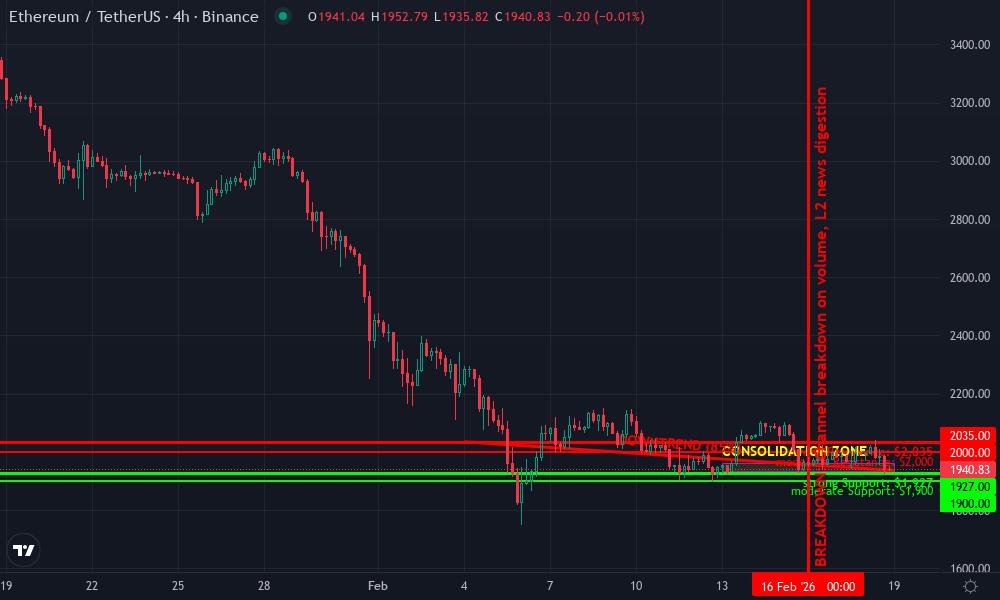
Ethereum Technical Analysis Chart
Analysis by Isabella Garcia | Symbol: BINANCE:ETHUSDT | Interval: 4h | Drawings: 7
Technical Analysis Summary
Draw a prominent downtrend line connecting the swing high at $2,035 on 2026-02-04 to the recent low at $1,928 on 2026-02-18, extending forward with moderate confidence. Add horizontal support at $1,927 (24h low) and $1,900 (psychological), resistance at $2,000 and $2,035 (24h high). Mark a consolidation rectangle from 2026-02-13 to 2026-02-19 between $1,930-$1,960. Use arrow_mark_down on recent MACD bearish crossover around 2026-02-16, and callout on volume spike during breakdown. Fib retracement from recent high-low for potential entry zones. Horizontal lines for entry/exit at $1,940 long with SL $1,920, PT $2,000. Vertical line for potential news catalyst on 2026-02-19. Text notes: ‘Sequencer swing low forming?’ in my swing style.
Risk Assessment: medium
Analysis: Volatile post-hype correction, but L2 fundamentals strong; aligns with my medium tolerance for swings
Isabella Garcia’s Recommendation: Wait for $1,927 hold then long for 2-5% swing to $2,000, catch sequencer early
Key Support & Resistance Levels
📈 Support Levels:
-
$1,927 – 24h low, strong volume support test
strong -
$1,900 – Psychological round number, prior swing low
moderate
📉 Resistance Levels:
-
$2,035 – 24h high, recent rejection zone
strong -
$2,000 – Key psychological resistance
moderate
Trading Zones (medium risk tolerance)
🎯 Entry Zones:
-
$1,936 – Bounce from support in downtrend channel, sequencer momentum signal
medium risk
🚪 Exit Zones:
-
$1,920 – Below 24h low invalidates bounce
🛡️ stop loss -
$2,050 – Measured move from channel projection
💰 profit target
Technical Indicators Analysis
📊 Volume Analysis:
Pattern: Increasing on downside, bearish divergence on pullback
Volume spikes confirm selling pressure, watch for climax
📈 MACD Analysis:
Signal: Bearish crossover
MACD line below signal, histogram contracting—potential reversal soon
Applied TradingView Drawing Utilities
This chart analysis utilizes the following professional drawing tools:
Disclaimer: This technical analysis by Isabella Garcia is for educational purposes only and should not be considered as financial advice.
Trading involves risk, and you should always do your own research before making investment decisions.
Past performance does not guarantee future results. The analysis reflects the author’s personal methodology and risk tolerance (medium).
These numbers aren’t static. Edge nodes and batch optimizations push boundaries, but hardware matters: 64-cores minimum or watch throughput flatline. I’ve positioned on Taiko dips when benchmarks confirmed linear scaling, riding 25% bounces as L2 tx volume hit 85% of chain total.
Your Action Plan: Deploying and Monitoring Shared Sequencers
Enough theory; here’s how you operationalize this for 2026 dominance. Start with Taiko sync, layer in Pipe Rocket, stress-test under load. SharedSeqWatch dashboards make it plug-and-play, alerting on every rollup latency metrics blip. Devs, fraud proofs aren’t optional; they’re your decentralization badge.
Unlock 150ms Latency: 5-Step Shared Sequencer Benchmark Guide for Taiko Rollups

Operators nailing this see 80% L1 cost drops, unlocking gaming dApps that Solana envies. ZK rollups mature here too, but optimistic flavors need sequencer overhauls. From my trades, chains under 200ms latency outperform by 18% YTD, even as ETH sits at $1,936.70.
Decentralization wins via relentless sequencer performance benchmarks; ignore them, and your rollup joins the graveyard of MEV casualties.
Fairness audits reveal the truth: zk stacks shine on gossip but falter on throughput without shared pools. L3 proliferation demands this; consumer apps won’t tolerate 70k TPS caps. Benchmark against peers on SharedSeqWatch, filter by quartiles, and trade the gaps. Ethereum’s rollup ecosystem thrives when operators act on data, not hype.
Picture 2026: 85% tx on L2, shared sequencers as the backbone. Low-latency setups fuel swings, from DeFi to gaming. I’ve banked consistent gains overlaying these metrics with volume; you can too. Fire up those dashboards, benchmark ruthlessly, and catch the next sequencer surge before it breaks out.
About the Author